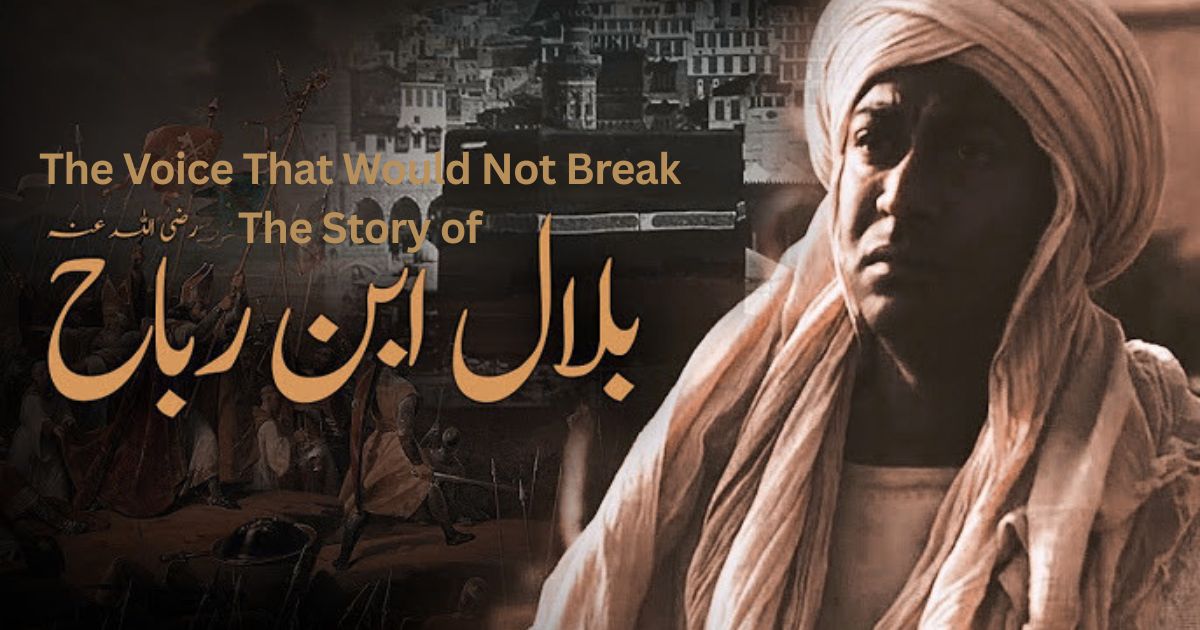
The Voice That Would Not Break: The Story of Bilal ibn Rabah
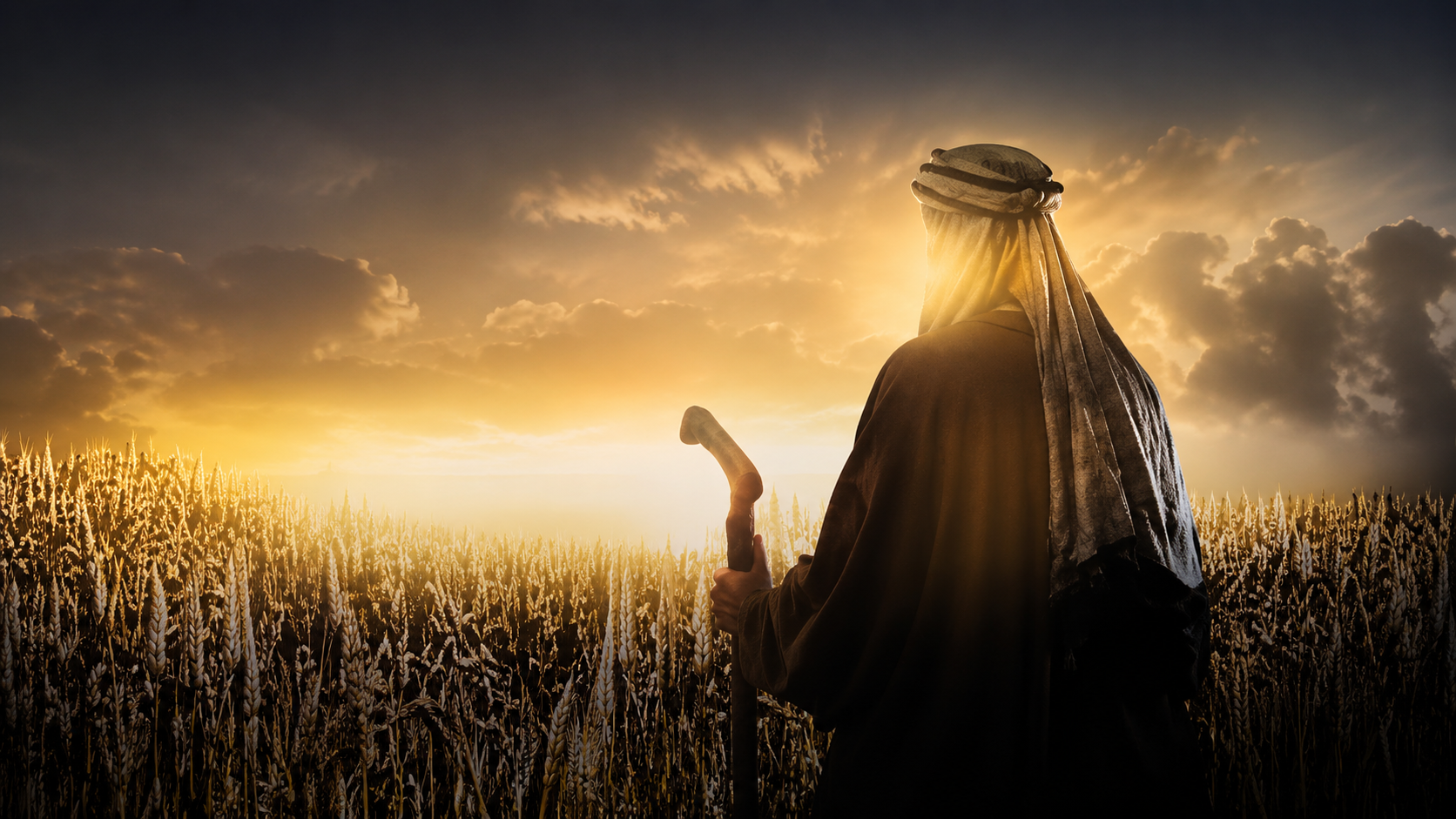
The sun over Mecca did not discriminate. It burned the skin of the enslaved just as it burned the skin of the free. But in the valley of Mecca, during those early, fragile years of Islam, there was one man who felt its wrath more than most — not because he was weaker than others, but because he refused to lie.
His name was Bilal. Son of Rabah. Born into slavery, his mother a captured Abyssinian woman, he had known nothing of freedom in the conventional sense. He belonged — in the cruel legal language of that time — to Umayyah ibn Khalaf, one of the most powerful and merciless men in all of Mecca. Bilal was dark-skinned in a society that weaponised skin colour. He was enslaved in a city that worshipped power. And yet, something burned inside him that no master could own.
When the message of Islam began to reach the ears of Mecca's people — quietly, secretly, like water finding cracks in stone — Bilal heard it. And unlike many who hesitated, who weighed the social cost, who feared the tribe, Bilal did not hesitate. He had nothing to lose in this world. And he had found something worth everything.
He accepted Islam.
When Umayyah found out, the punishment was swift and theatrical. It was not enough to beat Bilal in private. The public had to see. The enslaved had to learn. And so, in the full, blazing heat of the Meccan afternoon, Umayyah had Bilal dragged to the scorching rocky ground outside the city. He was made to lie on his back on the burning earth. A great boulder — a stone so heavy it took several men to lift — was placed upon his chest.
The message was clear: recant. Say the idols are gods. Say Muhammad ﷺ is a liar. Say it, and this ends.
Bilal said one word. Then said it again. Then kept saying it, over and over, like a heartbeat, like breathing, like the only truth the universe had ever contained:
Ahad. Ahad. Ahad.
One. One. One.
He was not saying it to defy Umayyah. He was not performing courage. He was doing the only thing that made sense to a soul that had found its Lord — he was affirming what he knew. Allah is One. And that was worth the boulder. That was worth the sun. That was worth everything Umayyah could devise.
Days passed. The torture continued. Word spread through Mecca — even the opponents of Islam spoke of it with an uneasy awe. What kind of man endures this? What kind of faith produces this?
It was Abu Bakr al-Siddiq, the closest companion of the Prophet ﷺ, who came. He walked to where Bilal lay, looked at Umayyah, and offered to buy him. Umayyah, expecting to profit handsomely from this strange spectacle, named a high price. Abu Bakr paid it without negotiating. And with that transaction, Bilal walked free — not just in body, but as a living, breathing symbol of what Islam had come to announce: that no human being is worth less than another in the sight of Allah.
Years later, when the Muslims had migrated to Madinah, when Islam had grown from a whisper to a call heard across the Arabian Peninsula, the Prophet ﷺ faced a beautiful question: who should be the first to call the believers to prayer? Who should send the adhan — the announcement of God's greatness — echoing over the city five times a day, forever?
He chose Bilal.
The man who had been silenced by a boulder was now given the most honoured voice in the community. The man who had been pressed into the dust was now elevated above the rooftops. And when Bilal climbed and filled his lungs and let his voice carry those words — Allahu Akbar, Allahu Akbar — across Madinah for the very first time, there were companions who wept. Not from sadness, but from the overwhelming recognition of what Allah does with those who are faithful.
He raises them. He gives them back — and more — everything the world tried to take.
After the Prophet ﷺ passed away, Bilal found the grief so immense that he could no longer bring himself to call the adhan in Madinah. The words that had once been his greatest honour now tore at his heart. He travelled to Syria, dedicating himself to the cause of Islam through other means.
But once — just once — he was asked to call the adhan again. When Umar ibn al-Khattab visited Syria and the people begged to hear Bilal's voice, he agreed. He climbed, he called, and the entire assembly — battle-hardened men who had faced swords without flinching — broke down and wept openly. They were weeping for the Prophet ﷺ, yes. But they were also weeping because they could hear in Bilal's voice everything Islam had promised: that truth endures, that the faithful are never truly defeated, and that one day, the voice pressed under a boulder would be the voice that calls all of creation to its Lord.
Bilal ibn Rabah died having fulfilled his purpose completely. He is buried in Damascus, and to this day, five times a day, across every mosque and minaret on earth, his legacy echoes. Every muezzin who climbs and calls — Hayya 'ala al-Falah, come to success — is continuing what a man in chains began: the insistence that Allah alone is great, and that nothing in this world — no boulder, no master, no cruelty — is greater than that.
Bilal ibn Rabah was an Abyssinian slave who became one of the most beloved companions of the Prophet Muhammad ﷺ and the first muadhin in Islamic history. His story stands as an eternal testament to the power of faith over oppression, and his name is synonymous with perseverance in the face of unbearable suffering.
- Iman (faith) is not a feeling — it is a conviction so deep that no external force can uproot it. Bilal did not endure the boulder because he was exceptionally strong; he endured it because he had found something more real than his pain.
- Allah elevates those who are humiliated for His sake. The same voice Umayyah tried to crush became the voice of the first adhan in Islam — a reminder that the oppressor never has the final word.
- Freedom is first an internal reality. Bilal was free inside himself long before Abu Bakr purchased his physical freedom. When a person's heart belongs to Allah, no chain can truly bind them.
In the daily life of a Muslim today, Bilal's story speaks directly to every moment of social pressure, workplace ridicule, or family tension that arises from practicing the deen openly. When a sister is mocked for her hijab, when a brother is dismissed in a meeting for leaving to pray, when a young Muslim is made to feel that their faith makes them lesser — Bilal's voice answers. He did not shrink. He did not negotiate away his conviction to make his captors comfortable. He said Ahad, and he kept saying it. The lesson is not to be confrontational, but to be unashamed. To practice Islam as though Allah is watching — because He is — and not as though the crowd is watching.
There is also a lesson about patience and divine timing. Bilal did not know that one day he would stand atop the Kaaba, calling the adhan on the day Mecca itself was opened to Islam. He only knew the boulder on his chest and the truth in his heart. Muslims who are going through trials — illness, financial hardship, broken relationships, delayed dreams — are invited to sit with Bilal's story and trust in the same principle: Allah does not waste the suffering of those who are patient for His sake. The elevation comes. It may not come the way we expect or when we expect it, but the promise of Allah is not decorative. It is structural. It holds everything up.